


Birds are experts at hiding illness. In the wild, a bird that looks weak becomes a target, so budgies instinctively act “normal” until they are quite unwell. By the time you notice a clear problem, your budgie may have been sick for days. Knowing the early warning signs can save its life.
Important: this article is general information, not veterinary advice. If you are worried about your bird, call an avian vet. Do not wait.
The 12 warning signs
1. Fluffed-up feathers
A budgie that stays puffed up for long periods, especially during the day, is trying to keep warm because it feels unwell. Brief fluffing during rest or sleep is normal. See why parakeets puff up.
2. Sitting on the cage floor
Healthy budgies perch. A bird that sits on the floor or cannot hold on to a perch is weak and needs help.
3. Tail bobbing with each breath
A tail that moves up and down with every breath shows the bird is working hard to breathe. This can signal respiratory trouble. Read about respiratory issues.
4. Sneezing, wheezing or clicking sounds
An occasional sneeze is normal, as budgies clear their nostrils. Frequent sneezing, wheezing, clicking, coughing or a runny nose are not.
5. Discharge from the eyes or nose
Wet, swollen, crusty or sticky eyes and nostrils, or a nose that looks wet or blocked, call for a vet visit.
6. Loss of appetite
A budgie that stops eating, or eats much less, can get weak quickly because of its fast metabolism.
7. Changes in droppings
Droppings have three parts: green or brown feces, white urates and clear liquid. Watery, bloody, black, yellow, very large or very small droppings, or no droppings at all, are warning signs. Changes after eating certain foods can be normal, so look for changes that last.
8. Weight loss
You can feel weight loss by gently checking the breastbone (keel). A sharp, prominent keel means the bird is underweight. Weigh your bird weekly on a small gram scale to notice early changes.
9. Too much sleep or low energy
A bird that sleeps much more than usual, is quiet, or loses interest in toys and company is signaling a problem.
10. Feather problems
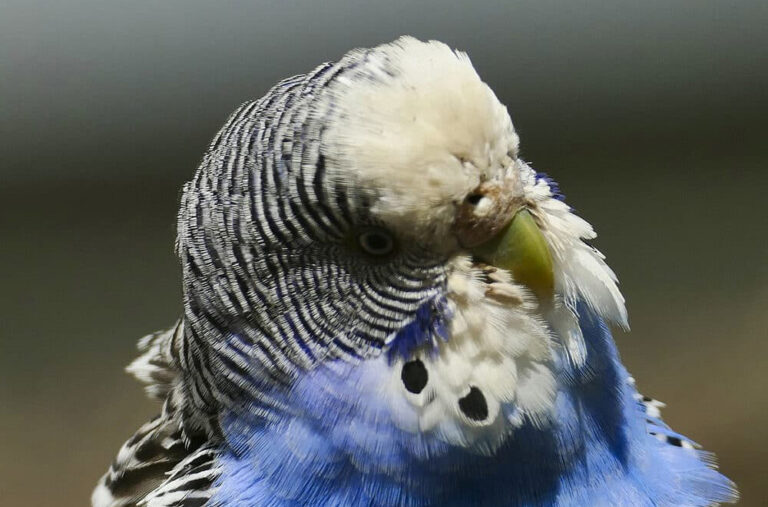
Sudden feather loss, plucking, dull or messy feathers, or a bare patch can be caused by illness, parasites, stress or poor diet. See healthy feathers.
11. Lumps, swelling or wounds
Any lump, swelling or wound needs checking. Budgies can develop tumors or abscesses.
12. Limping, weak grip or swollen feet
A weak grip, limping or swollen or sore feet can come from injuries, poor perches or illness. Read our healthy feet guide.
When to go to the vet immediately
Treat these as emergencies:
- Open-mouth breathing or severe breathing difficulty
- Bleeding that does not stop
- Seizures or loss of balance
- A female straining at the bottom of the cage or sitting fluffed after laying, which may mean egg binding. Read about egg binding.
- Eating something toxic. See safe and toxic foods for budgies.
- A bird that is unresponsive, cold or cannot perch
What you can do while you arrange a vet visit
- Keep your bird calm, warm and quiet. A gently warm room helps a sick bird conserve energy. Avoid overheating.
- Remove stress: dim the room, keep other pets away and limit handling.
- Keep food and water within easy reach, low in the cage.
- Do not give medicines, antibiotics or home remedies unless the vet tells you to. Many are dangerous for small birds.
- Write down the symptoms, the droppings and what the bird ate, and take a photo. It helps the vet.
- Take the bird to an avian vet, or a vet with bird experience, in a secure, covered carrier.
How to prevent illness
- Feed a balanced diet of pellets or varied seeds plus fresh vegetables
- Keep the cage clean and the water fresh
- Provide 10 to 12 hours of sleep
- Keep the air clean, with no smoke, aerosols or non-stick fumes
- Quarantine new birds before they meet your flock
- Book a yearly vet checkup
More on this in common diseases in budgies and budgie health and wellbeing.
FAQ
How can I tell if my budgie is sick or just sleepy? A sleepy budgie perches calmly, tucks its head and wakes up alert when disturbed. A sick budgie stays fluffed up, sits low and looks dull even when awake.
Is sneezing normal in budgies? Occasional sneezing is normal. Frequent sneezing with discharge, wheezing or tail bobbing is not.
Can a sick budgie recover without a vet? Some mild problems pass, but birds can decline fast. When in doubt, call a vet.
What temperature should a sick bird be kept at? A comfortably warm, draft-free room is usually recommended. Ask your vet for specifics for your bird.
Final thoughts
Check your budgie every day. Know what its normal behavior, appetite and droppings look like, and act early when something changes. A quick call to an avian vet is always better than waiting.
Supplies we recommend
As an Amazon Associate I earn from qualifying purchases. Affiliate disclosure.
- A small gram scale – Weigh your bird weekly to catch weight loss early.
- Small bird travel carrier – Keep one ready for emergency vet visits.