

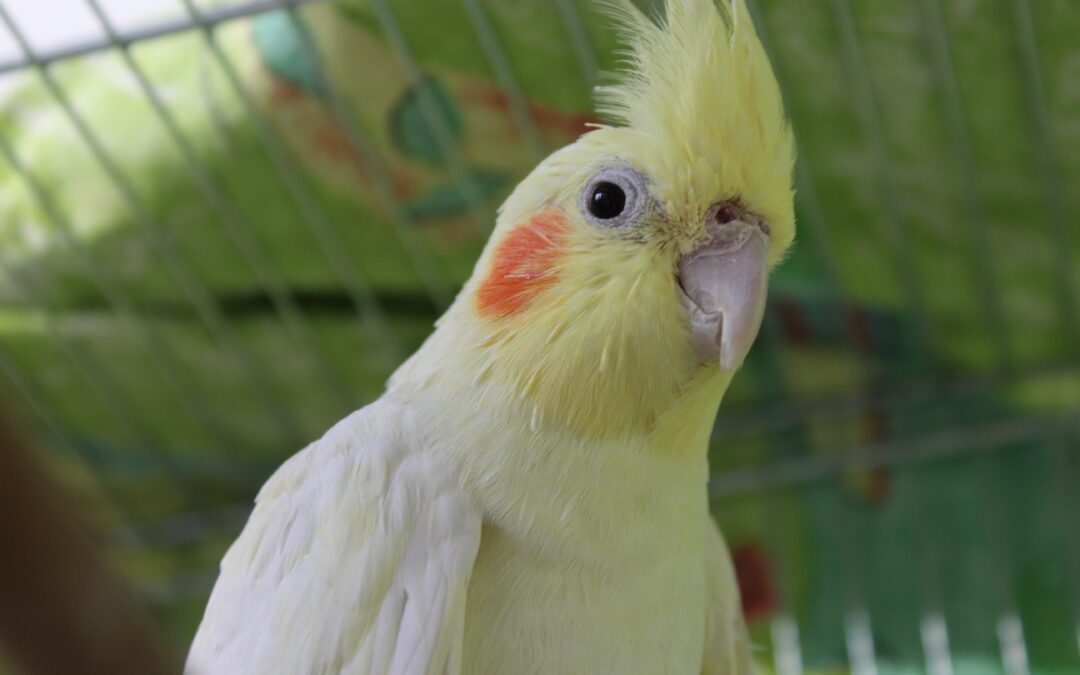
Cockatiels are one of the most popular pet birds after budgies, and one of the first questions that new owners ask is: is my bird a boy or a girl? Unlike many parrots, some cockatiels can be sexed by sight, but only in some colors and only after the first molt. This guide shows what to look for.
Quick answer: in the common grey cockatiel, adult males have a bright yellow face and vivid orange cheek patches, while females have a duller, greyish face with paler cheeks, barred tail feathers and yellow spots under the wings. Many color mutations hide these differences, and a DNA test is the only sure way.
Why it is hard to tell with young cockatiels
Baby cockatiels look alike. Young males resemble females until their first molt, at around 6 to 9 months. Until then, a cockatiel’s sex is a guess. Wait for adult feathers before you judge.

Visual differences in normal grey cockatiels
| Feature | Adult male | Adult female |
|---|---|---|
| Face | Bright, clean yellow | Duller, grey-yellow |
| Cheek patch | Bold orange | Paler orange |
| Tail feathers (underside) | Solid grey | Barred, with yellow and grey stripes |
| Wing underside | Mostly plain | Yellow spots on the underside of the flight feathers |
| Overall | Brighter | More muted |
The tail bars and wing spots are the most reliable signs in a grey cockatiel.
Cockatiel mutations and why they confuse things
Some colors hide the usual signs.
- Lutino (yellow with red eyes): sexing by color is nearly impossible. Both sexes have a yellow face and orange cheeks. Females often keep some spots on the tail and wing, as a clue.
- Albino (white with red eyes): similar problem.
- Pearl (laced): young males lose the pearl pattern at the first molt, but females often keep the pearls.
- Pied: patchy colors can change the face pattern.
- Whiteface: males lose the yellow facial color and look more like a female. Their tail barring is a better clue.
When in doubt, rely on tail and wing markings, not just face colors.
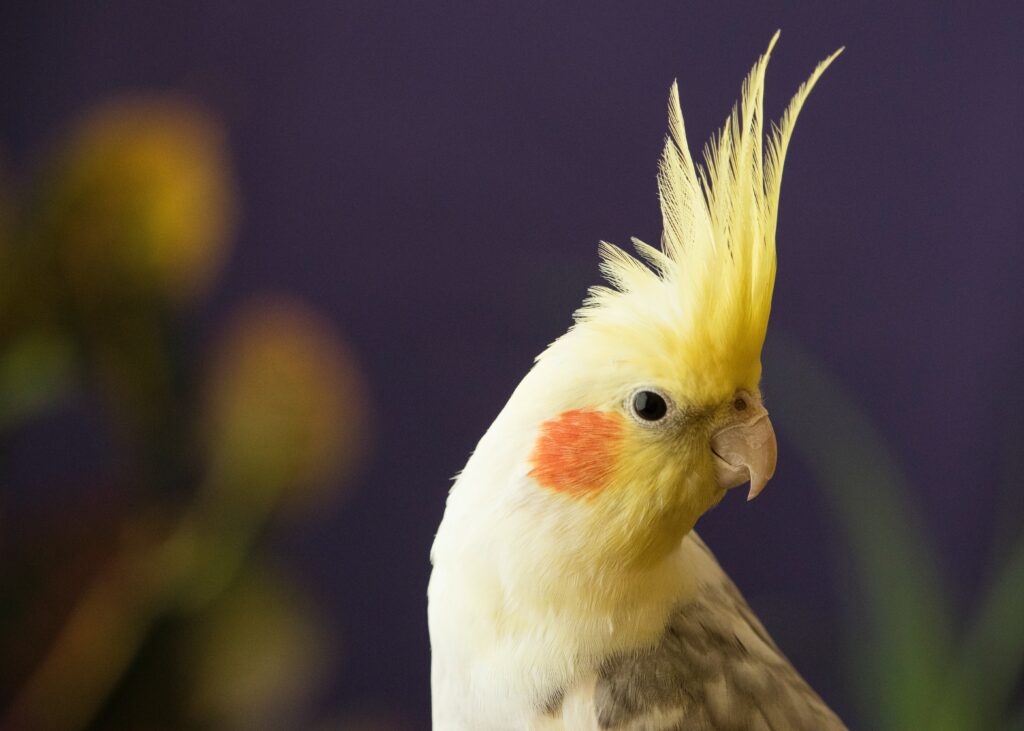
Behavior clues
These are less reliable, but they help.
- Males whistle, sing and mimic more, and they may tap, dance and display with their wings held out.
- Females are usually quieter, and they may hiss when they are scared or in breeding mode. They are more likely to lay eggs.
- Both sexes can be affectionate and talkative to some degree. Personality varies a lot.
See our guide to cockatiel sounds and what they mean.
Eggs: the clearest proof
Only a female can lay eggs. A cockatiel that lays eggs, even with no mate, is a hen. See laying eggs without a male, which also applies to cockatiels. Egg binding is a medical emergency in all small birds. Learn more in egg binding in small pet birds.
DNA testing
A DNA feather or blood test is the only 100% reliable way. A few feathers with fresh roots, or an eggshell, are sent to a lab. It is quick, safe and often inexpensive. A vet can also advise.
Does sex matter for a pet?
Both sexes can make great companions. Males are often better talkers and whistlers, while females can be more independent. If you plan to keep a pair, remember that breeding is demanding and has health risks. See breeding budgies for general lessons that also apply.
FAQ
At what age can you tell a cockatiel’s sex? After the first full molt, at 6 to 9 months, for grey cockatiels.
Can a female cockatiel look like a male? In some mutations, yes. A DNA test is best.
Do male cockatiels talk more? Often, but not always.
Can two female cockatiels live together? Often yes, but they can bond or fight. Watch them.
Final thoughts
Look at the tail, the wings and the face, wait for the first molt, and confirm with a DNA test if you need certainty. For an introduction to the species, see our cockatiel care guide.
Supplies we recommend
As an Amazon Associate I earn from qualifying purchases. Affiliate disclosure.
- A play stand – Cockatiels like a stand to perch and play.